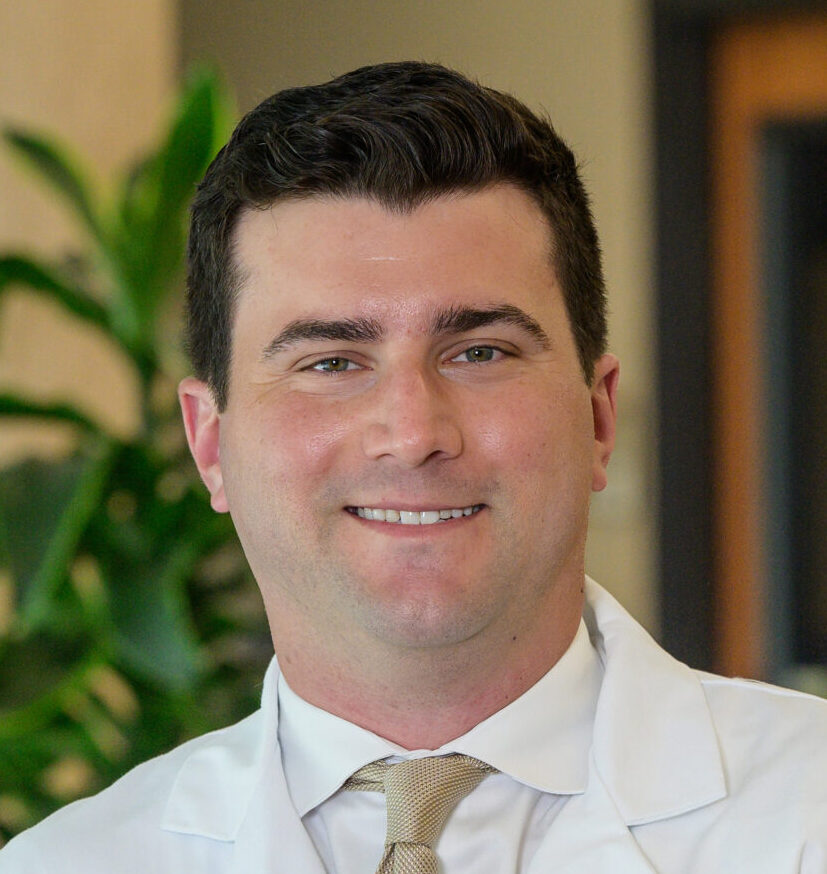
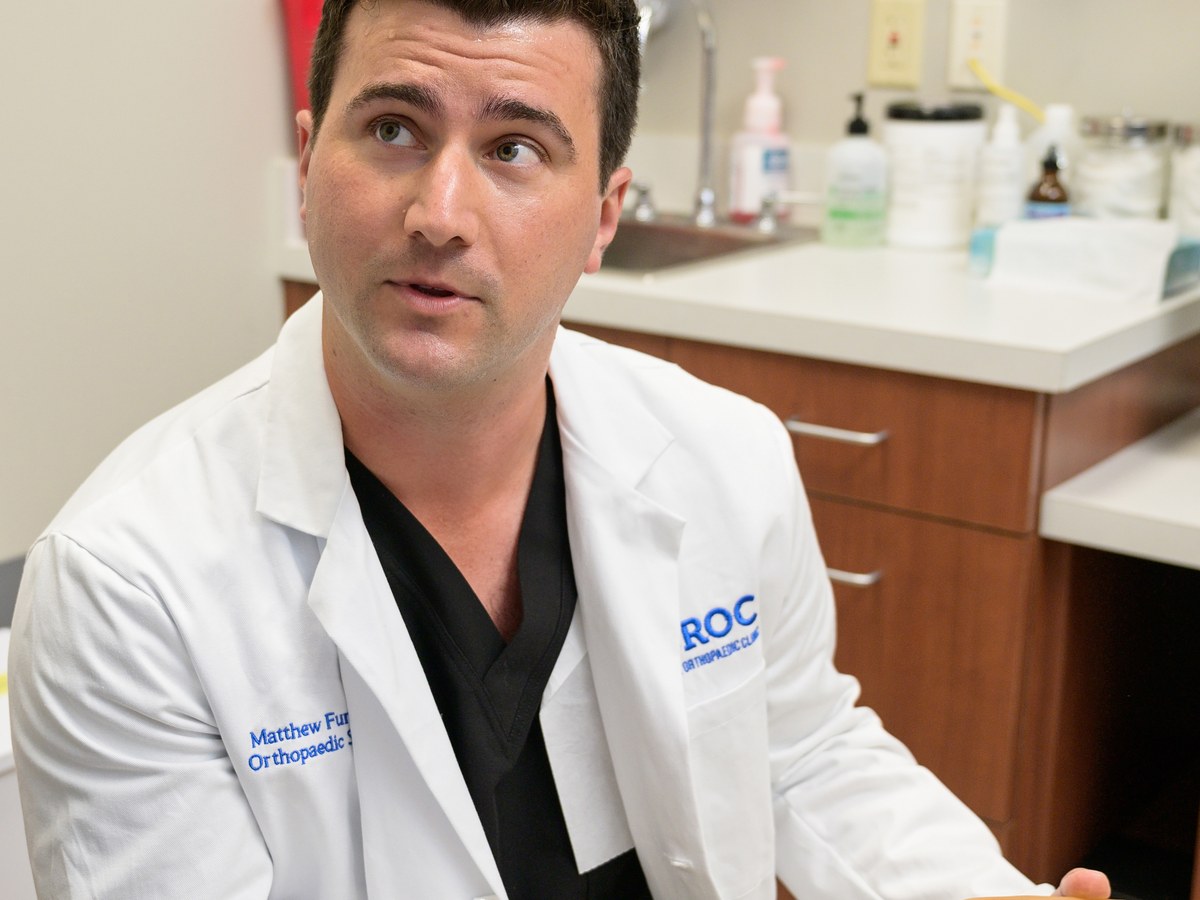
Dr. Matt Fury grew up on Louisiana baseball. He played at LSU before medical school, trained at the Harvard Combined Orthopaedic Residency, and finished with a sports medicine fellowship at the Hospital for Special Surgery, where he covered the New York Mets. Then he came home. He practices now at Baton Rouge Orthopaedic Clinic, with the same academic ambitions he trained under, minus the residents, med students, and research staff that make them easy at an academic center. Closing that gap is what Mira does for him.
When we caught up with him at the end of June he was, fittingly, in transit: a few cases snuck in that morning, then across town to help a partner with theirs. He took the call from the road.
The pod noticed
On surgery days, Dr. Fury sometimes gets to clinic late because a case ran long. When that happens, he told us, he goes straight from room to room and sees his patients, with no catching up at a workstation first and no documentation debt waiting at the end of the day. A couple of people in his pod, the ones around him all the time, took notice and asked. “They’re like, okay, why are you not sitting down and doing any notes?” he recalled. The notes still get done. They just happen while he’s moving, and, in his words, “people are starting to get interested.”
It’s worth saying why the moving part matters. His clinic runs deliberately team-based, with multiple team members making their own touchpoints in a single visit: his medical assistant starts the history, his physician assistant comes in to examine, sometimes a resident joins, and finally he swings back around himself. Before Mira, he was unable to find a scribe that could effectively manage that layered, multi-team-member approach to the visit. As he explained it, with everybody on a single login, “you walk in, you press the button and it picks up as you go,” building one encounter with multiple people at play.
He put numbers on it when we spoke again in late July. His big clinic days run to 70 patients, and the old arithmetic was grim: finish at 5:15 on a Friday with 66 notes waiting, then either “sit here and ruin our Friday evening and write and sign notes until our eyes bleed,” or leave and give up the weekend instead. He still has 120 dictations sitting in his Epic inbox from the months before Mira. Now, in his words, “the work is recorded as we’re doing it.” He walks out the door with nothing left to write, only notes to sign, and, as he put it, “my quality of life is greatly improved.”
The op note that beats the transcription service
At his surgery center, the old path for an operative note was a relay. You dictate into a phone, the transcription service types it up, you sign it, the note routes to your EMR, and only then can anyone bill. Add the second system at the hospital (Epic there, a straight dictation app at the ASC) and, in his words, it was “a little bit of a mess.” On a seven or eight case day, that is a lot of notes waiting in someone else’s queue.
He runs the relay in reverse now. “So what I do is I use Mira to dictate my operative notes,” he said. He operates, walks between rooms while the next patient is prepped, and dictates there in the hallway. Mira generates the note and codes it, checking the payer’s policy in real time as the note is generated. His admin then faxes the finished note over to the surgery center, rather than waiting on the surgery center to send it back. The result, as he put it: “You get your billings out before you have the surgery center send their billings out.”
What the coding layer is worth
The cleanest measure of that coding layer comes from the practice’s own billing data. His billing team pulled his E/M visit volumes for the two months before Mira and his first two months on it, and the shift is plain. Established visits documented at level 4 went from 27 percent to 56 percent. New patient visits made the same move, from 49 percent at level 4 or above to 77 percent. The note that leaves the building now supports the level the visit actually earned.
Priced at 2026 Medicare rates, that shift works out to about 15 percent more revenue on the same visit volume, every point of it tied to documentation already in the note.
Research without the research staff
Dr. Fury comes from a deeply academic training background, and he never planned to leave research behind when he went into private practice. The hard part, he told us, is the setting: “It’s hard because you don’t have all the extra resources around. You don’t have the med students and residents around.” The financial realities of private practice keep you running lean.
His answer is to make the documentation do the collecting. “You don’t need all the extra resources if we can build efficient systems that collect data in real time.” Every op note he dictates already contains the variables a study needs, and Mira Research extracts them into a research database as a byproduct of the note itself. We’re building it alongside him, and his practice is where the benefit gets operationalized first: real studies, run on the notes he’s already writing.
The clinical care episode has just been seamlessly recorded, billed, extracted, in a way that takes no manpower.
What’s next
The day he’s after ends with nothing left over: close the door, walk to the next room, and it’s all handled. “Your coding’s done, your op note is done, your intraoperative variables have been extracted and uploaded into the database.” We at Mira are pumped to be making that a reality.